For readers of Outsmart the Manipulator
Your Free Field Kit
You finished the briefing. This is the part that stays in your pocket.
The manipulator’s first target is never your behavior. It’s your confidence in your own memory.
A Machiavellian doesn’t need to lie to you. They just need to control what you know.
“Urgency is not evidence. I’ll decide after I’ve looked at the facts.”
+ every other rule, script and protocol from the book
Next · Free by email
The Defense Toolkit
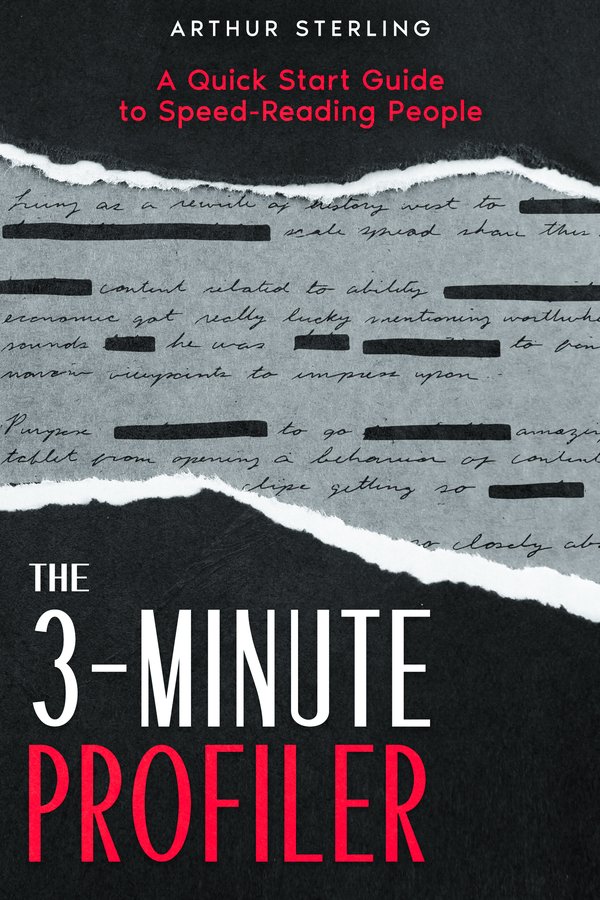
The 3-Minute Profiler: a 20-page quick-start guide to reading people in the first three minutes of any encounter.
Get The Defense Toolkit by email
You'll confirm your address, then get the Toolkit at once. Unsubscribe anytime. Privacy policy
Check your inbox.
Confirm your address and The Defense Toolkit arrives right after. Nothing there in a few minutes? Look in your spam or promotions folder.
42 sources
Every source the book cites
The full list of sources for Outsmart the Manipulator, as printed in the book.
Show all 42 sources
Arkes, H. R., & Blumer, C. (1985). The psychology of sunk cost. Organizational Behavior and Human Decision Processes, 35, 124–140.
Arnsten, A. F. T. (2009). Stress signalling pathways that impair prefrontal cortex structure and function. Nature Reviews Neuroscience, 10(6), 410–422. https://doi.org/10.1038/nrn2648
Austin, E. J., Farrelly, D., Black, C., & Moore, H. (2007). Emotional intelligence, Machiavellianism and emotional manipulation: Does EI have a dark side? Personality and Individual Differences, 43(1), 179–189. https://doi.org/10.1016/j.paid.2006.11.019
Bartlett, F. C. (1932). Remembering: A study in experimental and social psychology. Cambridge University Press.
Baumeister, R. F., & Leary, M. R. (1995). The need to belong: Desire for interpersonal attachments as a fundamental human motivation. Psychological Bulletin, 117(3), 497–529. https://doi.org/10.1037/0033-2909.117.3.497
Blair, R. J. R. (2012). Considering anger from a cognitive neuroscience perspective. Wiley Interdisciplinary Reviews: Cognitive Science, 3(1), 65–74. https://doi.org/10.1002/wcs.154
Bond, C. F., Jr., & DePaulo, B. M. (2006). Accuracy of deception judgments. Personality and Social Psychology Review, 10(3), 214–234.
Book, A., Costello, K., & Camilleri, J. A. (2013). Psychopathy and victim selection: The use of gait as a cue to vulnerability. Journal of Interpersonal Violence, 28(11), 2368–2383. https://doi.org/10.1177/0886260512475315
Bushman, B. J., & Baumeister, R. F. (1998). Threatened egotism, narcissism, self-esteem, and direct and displaced aggression: Does self-love or self-hate lead to violence? Journal of Personality and Social Psychology, 75, 219–229.
de Becker, G. (1997). The gift of fear: Survival signals that protect us from violence. Little, Brown and Company.
DePaulo, B. M., Lindsay, J. J., Malone, B. E., Muhlenbruck, L., Charlton, K., & Cooper, H. (2003). Cues to deception. Psychological Bulletin, 129(1), 74–118.
Dobson, T., & Miller, V. (1993). Aikido in everyday life: Giving in to get your way (2nd ed.). North Atlantic Books. (Original work published 1978 as Giving in to get your way, Delacorte Press)
Festinger, L. (1957). A theory of cognitive dissonance. Stanford University Press.
Freyd, J. J. (1997). Violations of power, adaptive blindness and betrayal trauma theory. Feminism & Psychology, 7(1), 22–32. https://doi.org/10.1177/0959353597071004
Furnham, A., Richards, S. C., & Paulhus, D. L. (2013). The Dark Triad of personality: A 10 year review. Social and Personality Psychology Compass, 7(3), 199–216. https://doi.org/10.1111/spc3.12018
Global Deception Research Team. (2006). A world of lies. Journal of Cross-Cultural Psychology, 37(1), 60–74. https://doi.org/10.1177/0022022105282295
Goleman, D. (1995). Emotional intelligence. Bantam Books.
Hamilton, P. (1939). Gas light: A Victorian thriller in three acts. Constable. (First performed 1938)
Hare, R. D. (2003). Hare Psychopathy Checklist-Revised (PCL-R): Technical manual (2nd ed.). Multi-Health Systems.
Harsey, S. J., Zurbriggen, E. L., & Freyd, J. J. (2017). Perpetrator responses to victim confrontation: DARVO and victim self-blame. Journal of Aggression, Maltreatment & Trauma, 26(6), 644–663. https://doi.org/10.1080/10926771.2017.1320777
Hatfield, E., Cacioppo, J. T., & Rapson, R. L. (1993). Emotional contagion. Current Directions in Psychological Science, 2(3), 96–100. https://doi.org/10.1111/1467-8721.ep10770953
Kawall, J. (2024). Epistemic autonomy and the shaping of our epistemic lives. Social Epistemology, 38(3), 374–391. https://doi.org/10.1080/02691728.2024.2326840
Kross, E., Berman, M. G., Mischel, W., Smith, E. E., & Wager, T. D. (2011). Social rejection shares somatosensory representations with physical pain. Proceedings of the National Academy of Sciences, 108(15), 6270–6275. https://doi.org/10.1073/pnas.1102693108
Loftus, E. F. (2005). Planting misinformation in the human mind: A 30-year investigation of the malleability of memory. Learning & Memory, 12(4), 361–366. https://doi.org/10.1101/lm.94705
Lykken, D. T. (1957). A study of anxiety in the sociopathic personality. Journal of Abnormal and Social Psychology, 55, 6–10.
Meerloo, J. A. M. (1956). The rape of the mind: The psychology of thought control, menticide, and brainwashing. World Publishing Company.
Milgram, S. (1963). Behavioral study of obedience. Journal of Abnormal and Social Psychology, 67(4), 371–378.
Nader, K., Schafe, G. E., & LeDoux, J. E. (2000). Fear memories require protein synthesis in the amygdala for reconsolidation after retrieval. Nature, 406(6797), 722–726. https://doi.org/10.1038/35021052
Nagler, U. K. J., Reiter, K. J., Furtner, M. R., & Rauthmann, J. F. (2014). Is there a “dark intelligence”? Emotional intelligence is used by dark personalities to emotionally manipulate others. Personality and Individual Differences, 65, 47–52. https://doi.org/10.1016/j.paid.2014.01.025
Navarro, J., & Karlins, M. (2008). What every BODY is saying: An ex-FBI agent’s guide to speed-reading people. William Morrow.
Nickerson, R. S. (1998). Confirmation bias: A ubiquitous phenomenon in many guises. Review of General Psychology, 2(2), 175–220. https://doi.org/10.1037/1089-2680.2.2.175
Paulhus, D. L., & Williams, K. M. (2002). The Dark Triad of personality: Narcissism, Machiavellianism, and psychopathy. Journal of Research in Personality, 36(6), 556–563. https://doi.org/10.1016/S0092-6566(02)00505-6
Ressler, K. J. (2010). Amygdala activity, fear, and anxiety: Modulation by stress. Biological Psychiatry, 67(12), 1117–1119. https://doi.org/10.1016/j.biopsych.2010.04.027
Skylar. (2012, February 10). The Gray Rock method of dealing with psychopaths. Lovefraud. https://lovefraud.com/the-gray-rock-method-of-dealing-with-psychopaths/
Smith, M. J. (1975). When I say no, I feel guilty: How to cope, using the skills of systematic assertive therapy. Dial Press.
Thorndike, E. L. (1920). A constant error in psychological ratings. Journal of Applied Psychology, 4(1), 25–29.
Travers, M. (2024, November 21). 2 tell-tale signs of a dark Machiavellian personality. Psychology Today. https://www.psychologytoday.com/us/blog/social-instincts/202411/2-tell-tale-signs-of-a-dark-machiavellian-personality
Tversky, A., & Kahneman, D. (1974). Judgment under uncertainty: Heuristics and biases. Science, 185(4157), 1124–1131.
Vrij, A. (2008). Detecting lies and deceit: Pitfalls and opportunities (2nd ed.). John Wiley & Sons.
Vrij, A., Mann, S., Fisher, R., Leal, S., Milne, R., & Bull, R. (2008). Increasing cognitive load to facilitate lie detection: The benefit of recalling an event in reverse order. Law and Human Behavior, 32(3), 253–265. https://doi.org/10.1007/s10979-007-9103-y
Wheeler, S., Book, A., & Costello, K. (2009). Psychopathic traits and perceptions of victim vulnerability. Criminal Justice and Behavior, 36(6), 635–648.
Zaccaro, A., Piarulli, A., Laurino, M., Garbella, E., Menicucci, D., Neri, B., & Gemignani, A. (2018). How breath-control can change your life: A systematic review on psycho-physiological correlates of slow breathing. Frontiers in Human Neuroscience, 12, Article 353. https://doi.org/10.3389/fnhum.2018.00353
Arthur Sterling · Psychological Defense Field Manuals