For readers of Quiet Dominance
Your Free Field Kit
You finished the briefing. This is the part that stays in your pocket.
The comeback that arrives too late was never a speed problem. It was a preparation problem.
You can acknowledge everything and agree to nothing.
“I won’t be able to take this on.”
+ every other rule, script and protocol from the book
Next · Free by email
The Defense Toolkit
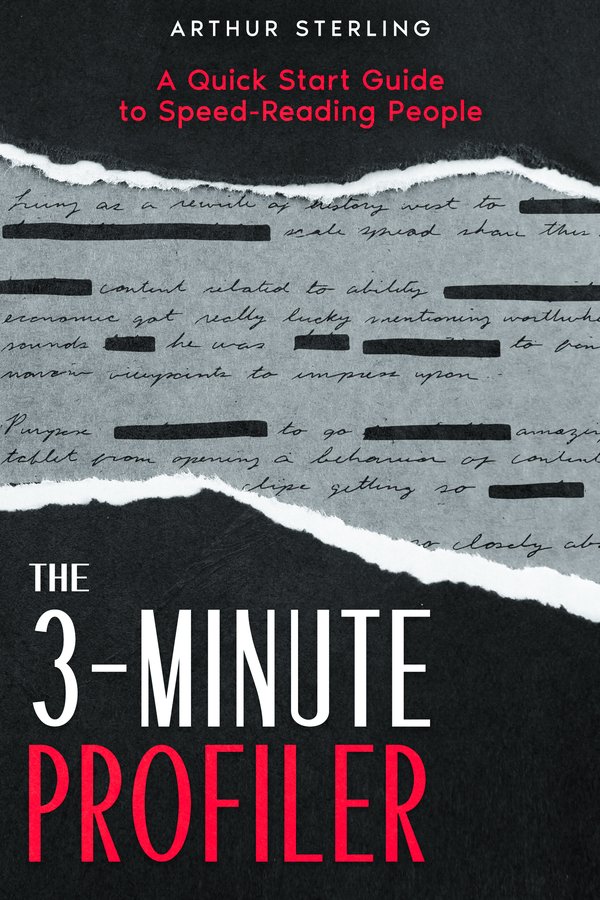
The 3-Minute Profiler: a 20-page quick-start guide to reading people in the first three minutes of any encounter.
Get The Defense Toolkit by email
You'll confirm your address, then get the Toolkit at once. Unsubscribe anytime. Privacy policy
Check your inbox.
Confirm your address and The Defense Toolkit arrives right after. Nothing there in a few minutes? Look in your spam or promotions folder.
23 sources
Every source the book cites
The full list of sources for Quiet Dominance, as printed in the book.
Show all 23 sources
Ambady, N., & Rosenthal, R. (1993). Half a minute: Predicting teacher evaluations from thin slices of nonverbal behavior and physical attractiveness. Journal of Personality and Social Psychology, 64(3), 431–441. https://doi.org/10.1037/0022-3514.64.3.431
Anderson, C., Hildreth, J. A. D., & Howland, L. (2015). Is the desire for status a fundamental human motive? A review of the empirical literature. Psychological Bulletin, 141(3), 574–601. https://doi.org/10.1037/a0038781
Arnsten, A. F. T. (2009). Stress signalling pathways that impair prefrontal cortex structure and function. Nature Reviews Neuroscience, 10(6), 410–422. https://doi.org/10.1038/nrn2648
Baumeister, R. F., Stillwell, A. M., & Heatherton, T. F. (1994). Guilt: An interpersonal approach. Psychological Bulletin, 115(2), 243–267. https://doi.org/10.1037/0033-2909.115.2.243
Blankenship, K. L., & Holtgraves, T. (2005). The role of different markers of linguistic powerlessness in persuasion. Journal of Language and Social Psychology, 24(1), 3–24. https://doi.org/10.1177/0261927X04273034
Bond, C. F., Jr., & DePaulo, B. M. (2006). Accuracy of deception judgments. Personality and Social Psychology Review, 10(3), 214–234. https://doi.org/10.1207/s15327957pspr1003_2
Brooks, A. W., Dai, H., & Schweitzer, M. E. (2014). I’m sorry about the rain! Superfluous apologies demonstrate empathic concern and increase trust. Social Psychological and Personality Science, 5(4), 467–474. https://doi.org/10.1177/1948550613506122
Collins, N. L., & Miller, L. C. (1994). Self-disclosure and liking: A meta-analytic review. Psychological Bulletin, 116(3), 457–475. https://doi.org/10.1037/0033-2909.116.3.457
Curhan, J. R., Overbeck, J. R., Cho, Y., Zhang, T., & Yang, Y. (2022). Silence is golden: Extended silence, deliberative mindset, and value creation in negotiation. Journal of Applied Psychology, 107(1), 78–94. https://doi.org/10.1037/apl0000877
DePaulo, B. M., Lindsay, J. J., Malone, B. E., Muhlenbruck, L., Charlton, K., & Cooper, H. (2003). Cues to deception. Psychological Bulletin, 129(1), 74–118. https://doi.org/10.1037/0033-2909.129.1.74
Dickerson, S. S., & Kemeny, M. E. (2004). Acute stressors and cortisol responses: A theoretical integration and synthesis of laboratory research. Psychological Bulletin, 130(3), 355–391. https://doi.org/10.1037/0033-2909.130.3.355
Erickson, B., Lind, E. A., Johnson, B. C., & O’Barr, W. M. (1978). Speech style and impression formation in a court setting: The effects of “powerful” and “powerless” speech. Journal of Experimental Social Psychology, 14(3), 266–279. https://doi.org/10.1016/0022-1031(78)90015-X
Flynn, F. J., & Lake, V. K. B. (2008). “If you need help, just ask”: Underestimating compliance with direct requests for help. Journal of Personality and Social Psychology, 95(1), 128–143. https://doi.org/10.1037/0022-3514.95.1.128
Gottman, J. M. (1994). What predicts divorce? The relationship between marital processes and marital outcomes. Lawrence Erlbaum Associates.
Koudenburg, N., Postmes, T., & Gordijn, E. H. (2011). Disrupting the flow: How brief silences in group conversations affect social needs. Journal of Experimental Social Psychology, 47(2), 512–515. https://doi.org/10.1016/j.jesp.2010.12.006
Lieberman, M. D., Eisenberger, N. I., Crockett, M. J., Tom, S. M., Pfeifer, J. H., & Way, B. M. (2007). Putting feelings into words: Affect labeling disrupts amygdala activity in response to affective stimuli. Psychological Science, 18(5), 421–428. https://doi.org/10.1111/j.1467-9280.2007.01916.x
Nolo. (2023, July 26). What is a mechanic’s lien? https://www.nolo.com/legal-encyclopedia/what-is-a-mechanics-lien.html
Patrick, V. M., & Hagtvedt, H. (2012). “I don’t” versus “I can’t”: When empowered refusal motivates goal-directed behavior. Journal of Consumer Research, 39(2), 371–381. https://doi.org/10.1086/663212
Shenk, C. E., & Fruzzetti, A. E. (2011). The impact of validating and invalidating responses on emotional reactivity. Journal of Social and Clinical Psychology, 30(2), 163–183. https://doi.org/10.1521/jscp.2011.30.2.163
Torre, J. B., & Lieberman, M. D. (2018). Putting feelings into words: Affect labeling as implicit emotion regulation. Emotion Review, 10(2), 116–124. https://doi.org/10.1177/1754073917742706
Tversky, A., & Kahneman, D. (1974). Judgment under uncertainty: Heuristics and biases. Science, 185(4157), 1124–1131. https://doi.org/10.1126/science.185.4157.1124
Voss, C., & Raz, T. (2016). Never split the difference: Negotiating as if your life depended on it. HarperBusiness.
Willis, J., & Todorov, A. (2006). First impressions: Making up your mind after a 100-ms exposure to a face. Psychological Science, 17(7), 592–598. https://doi.org/10.1111/j.1467-9280.2006.01750.x
Arthur Sterling · Psychological Defense Field Manuals