For readers of The Sovereign Mind
Your Free Field Kit
You finished the briefing. This is the part that stays in your pocket.
A feed with no bottom was not a feature. It was a decision to remove the moment where you might choose to stop.
You did not grant permission to be interrupted. You were defaulted into it.
“I did not decide to open this. Something opened it for me.”
+ every other rule, script and protocol from the book
Next · Free by email
The Defense Toolkit
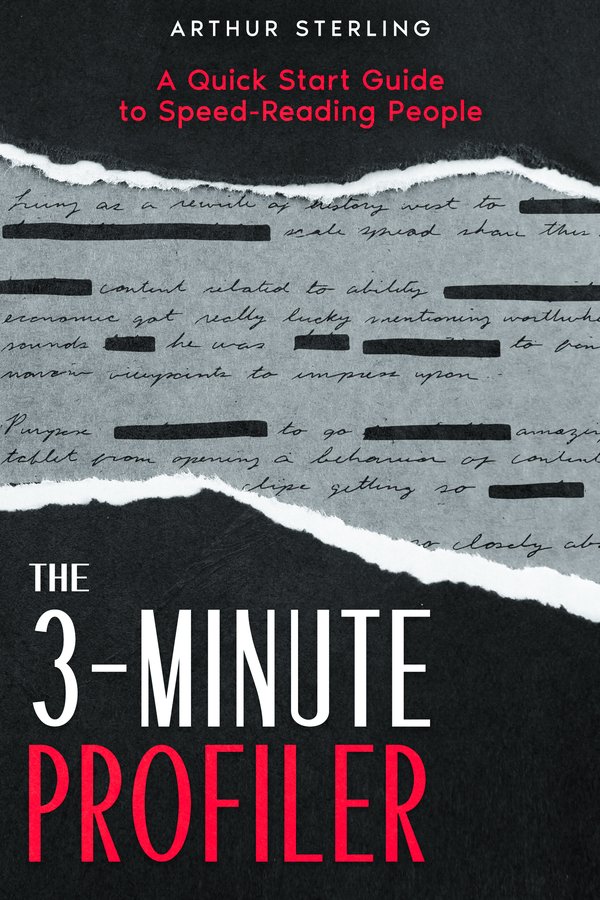
The 3-Minute Profiler: a 20-page quick-start guide to reading people in the first three minutes of any encounter.
Get The Defense Toolkit by email
You'll confirm your address, then get the Toolkit at once. Unsubscribe anytime. Privacy policy
Check your inbox.
Confirm your address and The Defense Toolkit arrives right after. Nothing there in a few minutes? Look in your spam or promotions folder.
85 sources
Every source the book cites
The full list of sources for The Sovereign Mind, as printed in the book.
Show all 85 sources
Allcott, H., Braghieri, L., Eichmeyer, S., & Gentzkow, M. (2020). The welfare effects of social media. American Economic Review, 110(3), 629–676. https://doi.org/10.1257/aer.20190658
Allen, M. (2017, November 9). Sean Parker unloads on Facebook: “God only knows what it’s doing to our children’s brains.” Axios. https://www.axios.com/2017/11/15/sean-parker-unloads-on-facebook-god-only-knows-what-its-doing-to-our-childrens-brains-1513306792
Alter, A. (2017). Irresistible: The rise of addictive technology and the business of keeping us hooked. Penguin Press.
Amos, A., & Haglund, M. (2000). From social taboo to “torch of freedom”: The marketing of cigarettes to women. Tobacco Control, 9(1), 3–8. https://doi.org/10.1136/tc.9.1.3
Anderson, C. A., Lepper, M. R., & Ross, L. (1980). Perseverance of social theories: The role of explanation in the persistence of discredited information. Journal of Personality and Social Psychology, 39(6), 1037–1049. https://doi.org/10.1037/h0077720
Andrews, S., Ellis, D. A., Shaw, H., & Piwek, L. (2015). Beyond self-report: Tools to compare estimated and real-world smartphone use. PLOS ONE, 10(10), Article e0139004. https://doi.org/10.1371/journal.pone.0139004
Arnsten, A. F. T. (2009). Stress signalling pathways that impair prefrontal cortex structure and function. Nature Reviews Neuroscience, 10(6), 410–422. https://doi.org/10.1038/nrn2648
Asch, S. E. (1956). Studies of independence and conformity: I. A minority of one against a unanimous majority. Psychological Monographs: General and Applied, 70(9), 1–70. https://doi.org/10.1037/h0093718
Basso, J. C., & Suzuki, W. A. (2017). The effects of acute exercise on mood, cognition, neurophysiology, and neurochemical pathways: A review. Brain Plasticity, 2(2), 127–152. https://doi.org/10.3233/BPL-160040
Berman, M. G., Jonides, J., & Kaplan, S. (2008). The cognitive benefits of interacting with nature. Psychological Science, 19(12), 1207–1212. https://doi.org/10.1111/j.1467-9280.2008.02225.x
Bernays, E. L. (1947). The engineering of consent. The Annals of the American Academy of Political and Social Science, 250(1), 113–120. https://doi.org/10.1177/000271624725000116
Berridge, K. C., & Robinson, T. E. (1998). What is the role of dopamine in reward: Hedonic impact, reward learning, or incentive salience? Brain Research Reviews, 28(3), 309–369. https://doi.org/10.1016/S0165-0173(98)00019-8
Blake, T., Moshary, S., Sweeney, K., & Tadelis, S. (2021). Price salience and product choice. Marketing Science, 40(4), 619–636. https://doi.org/10.1287/mksc.2020.1261
Boole, N. (2022, May 18). Subscription service statistics and costs. C+R Research. https://www.crresearch.com/blog/subscription-service-statistics-and-costs
Brignull, H. (2023). Deceptive patterns: Exposing the tricks tech companies use to control you. Testimonium.
Chan, S. (2022, July). Nearly one-third of TikTok’s installed base uses the app every day. Sensor Tower. https://sensortower.com/blog/tiktok-power-user-curve
Chang, A.-M., Aeschbach, D., Duffy, J. F., & Czeisler, C. A. (2015). Evening use of light-emitting eReaders negatively affects sleep, circadian timing, and next-morning alertness. Proceedings of the National Academy of Sciences, 112(4), 1232–1237. https://doi.org/10.1073/pnas.1418490112
Cialdini, R. B. (1984). Influence: How and why people agree to things. William Morrow.
Commission nationale de l’informatique et des libertés. (2021a). Deliberation of the restricted committee No. SAN-2021-023 of 31 December 2021 concerning Google LLC and Google Ireland Limited. https://www.cnil.fr/sites/default/files/atoms/files/deliberation_of_the_restricted_committee_no._san-2021-023_of_31_december_2021_concerning_google_llc_and_google_ireland_limited.pdf
Commission nationale de l’informatique et des libertés. (2021b). Deliberation of the restricted committee No. SAN-2021-024 of 31 December 2021 concerning Facebook Ireland Limited. https://www.cnil.fr/sites/cnil/files/atoms/files/deliberation_of_the_restricted_committee_no._san-2021-024_of_31_december_2021_concerning_facebook_ireland_limited.pdf
Csikszentmihalyi, M. (1990). Flow: The psychology of optimal experience. Harper & Row.
Dabbish, L., Mark, G., & González, V. M. (2011). Why do I keep interrupting myself? Environment, habit and self-interruption. In Proceedings of the SIGCHI Conference on Human Factors in Computing Systems (pp. 3127–3130). Association for Computing Machinery. https://doi.org/10.1145/1978942.1979405
Del Vicario, M., Bessi, A., Zollo, F., Petroni, F., Scala, A., Caldarelli, G., Stanley, H. E., & Quattrociocchi, W. (2016). The spreading of misinformation online. Proceedings of the National Academy of Sciences, 113(3), 554–559. https://doi.org/10.1073/pnas.1517441113
Doctorow, C. (2023, January 21). Tiktok’s enshittification. Pluralistic. https://pluralistic.net/2023/01/21/potemkin-ai/
Dunbar, R. I. M. (1992). Neocortex size as a constraint on group size in primates. Journal of Human Evolution, 22(6), 469–493. https://doi.org/10.1016/0047-2484(92)90081-J
Federal Trade Commission. (2023, June 21). FTC takes action against Amazon for enrolling consumers in Amazon Prime without consent and sabotaging their attempts to cancel [Press release]. https://www.ftc.gov/news-events/news/press-releases/2023/06/ftc-takes-action-against-amazon-enrolling-consumers-amazon-prime-without-consent-sabotaging-their
Federal Trade Commission. (2025, September 25). FTC secures historic $2.5 billion settlement against Amazon [Press release]. https://www.ftc.gov/news-events/news/press-releases/2025/09/ftc-secures-historic-25-billion-settlement-against-amazon
Ferster, C. B., & Skinner, B. F. (1957). Schedules of reinforcement. Appleton-Century-Crofts.
Festinger, L. (1957). A theory of cognitive dissonance. Row, Peterson.
Fiorillo, C. D., Tobler, P. N., & Schultz, W. (2003). Discrete coding of reward probability and uncertainty by dopamine neurons. Science, 299(5614), 1898–1902. https://doi.org/10.1126/science.1077349
Fries, E., Dettenborn, L., & Kirschbaum, C. (2009). The cortisol awakening response (CAR): Facts and future directions. International Journal of Psychophysiology, 72(1), 67–73. https://doi.org/10.1016/j.ijpsycho.2008.03.014
Glaser, R., & Kiecolt-Glaser, J. K. (2005). Stress-induced immune dysfunction: Implications for health. Nature Reviews Immunology, 5(3), 243–251. https://doi.org/10.1038/nri1571
Grant, A. (Host). (2024, May 14). Aza Raskin on why technology – and democracy – are in an imagination crisis [Audio podcast episode]. In ReThinking with Adam Grant. TED. https://www.ted.com/podcasts/rethinking-with-adam-grant/aza-raskin-on-why-technology-and-democracy-are-in-an-imagination-crisis-transcript
Grüning, D. J., Riedel, F., & Lorenz-Spreen, P. (2023). Directing smartphone use through the self-nudge app one sec. Proceedings of the National Academy of Sciences, 120(8), Article e2213114120. https://doi.org/10.1073/pnas.2213114120
Haidt, J., Björklund, F., & Murphy, S. (2000). Moral dumbfounding: When intuition finds no reason [Unpublished manuscript]. Department of Psychology, University of Virginia.
Hale, L., & Guan, S. (2015). Screen time and sleep among school-aged children and adolescents: A systematic literature review. Sleep Medicine Reviews, 21, 50–58. https://doi.org/10.1016/j.smrv.2014.07.007
Hari, J. (2022). Stolen focus: Why you can’t pay attention—and how to think deeply again. Crown.
Haugen, F. (2021, October 4). Statement of Frances Haugen [Testimony before the Subcommittee on Consumer Protection, Product Safety, and Data Security, U.S. Senate Committee on Commerce, Science, and Transportation, hearing “Protecting Kids Online: Testimony from a Facebook Whistleblower,” October 5, 2021]. https://www.commerce.senate.gov/wp-content/uploads/meetings/A04578DB-ADD9-41A7-BF1C-A22703DAEA02/Frances%20Haugen%20Written%20Testimony.pdf
Heitmayer, M., & Lahlou, S. (2021). Why are smartphones disruptive? An empirical study of smartphone use in real-life contexts. Computers in Human Behavior, 116, Article 106637. https://doi.org/10.1016/j.chb.2020.106637
Hilditch, C. J., & McHill, A. W. (2019). Sleep inertia: Current insights. Nature and Science of Sleep, 11, 155–165. https://doi.org/10.2147/NSS.S188911
Hiroto, D. S., & Seligman, M. E. P. (1975). Generality of learned helplessness in man. Journal of Personality and Social Psychology, 31(2), 311–327. https://doi.org/10.1037/h0076270
Humphreys, L. G. (1939). The effect of random alternation of reinforcement on the acquisition and extinction of conditioned eyelid reactions. Journal of Experimental Psychology, 25(2), 141–158. https://doi.org/10.1037/h0058138
Iyengar, S. S., & Lepper, M. R. (2000). When choice is demotivating: Can one desire too much of a good thing? Journal of Personality and Social Psychology, 79(6), 995–1006. https://doi.org/10.1037/0022-3514.79.6.995
Johnson, E. J., & Goldstein, D. (2003). Do defaults save lives? Science, 302(5649), 1338–1339. https://doi.org/10.1126/science.1091721
Kahneman, D. (2011). Thinking, fast and slow. Farrar, Straus and Giroux.
Kim, S. H., Baik, S.-H., Park, C. S., Kim, S. J., Choi, S. W., & Kim, S. E. (2011). Reduced striatal dopamine D2 receptors in people with Internet addiction. NeuroReport, 22(8), 407–411. https://doi.org/10.1097/WNR.0b013e328346e16e
Koob, G. F., & Le Moal, M. (2001). Drug addiction, dysregulation of reward, and allostasis. Neuropsychopharmacology, 24(2), 97–129. https://doi.org/10.1016/S0893-133X(00)00195-0
Kruglanski, A. W., & Webster, D. M. (1996). Motivated closing of the mind: “Seizing” and “freezing.” Psychological Review, 103(2), 263–283. https://doi.org/10.1037/0033-295X.103.2.263
Lambert, J., Barnstable, G., Minter, E., Cooper, J., & McEwan, D. (2022). Taking a one-week break from social media improves well-being, depression, and anxiety: A randomized controlled trial. Cyberpsychology, Behavior, and Social Networking, 25(5), 287–293. https://doi.org/10.1089/cyber.2021.0324
Lembke, A. (2021). Dopamine nation: Finding balance in the age of indulgence. Dutton.
Leroy, S. (2009). Why is it so hard to do my work? The challenge of attention residue when switching between work tasks. Organizational Behavior and Human Decision Processes, 109(2), 168–181. https://doi.org/10.1016/j.obhdp.2009.04.002
Lewandowsky, S., Ecker, U. K. H., Seifert, C. M., Schwarz, N., & Cook, J. (2012). Misinformation and its correction: Continued influence and successful debiasing. Psychological Science in the Public Interest, 13(3), 106–131. https://doi.org/10.1177/1529100612451018
Lewis, P. (2017, October 6). ‘Our minds can be hijacked’: The tech insiders who fear a smartphone dystopia. The Guardian. https://www.theguardian.com/technology/2017/oct/05/smartphone-addiction-silicon-valley-dystopia
Luguri, J., & Strahilevitz, L. J. (2021). Shining a light on dark patterns. Journal of Legal Analysis, 13(1), 43–109. https://doi.org/10.1093/jla/laaa006
Maier, S. F., & Seligman, M. E. P. (2016). Learned helplessness at fifty: Insights from neuroscience. Psychological Review, 123(4), 349–367. https://doi.org/10.1037/rev0000033
Mark, G., Gonzalez, V. M., & Harris, J. (2005). No task left behind? Examining the nature of fragmented work. In Proceedings of the SIGCHI Conference on Human Factors in Computing Systems (pp. 321–330). Association for Computing Machinery. https://doi.org/10.1145/1054972.1055017
Neal, D. T., Wood, W., & Quinn, J. M. (2006). Habits—A repeat performance. Current Directions in Psychological Science, 15(4), 198–202. https://doi.org/10.1111/j.1467-8721.2006.00435.x
Newport, C. (2016). Deep work: Rules for focused success in a distracted world. Grand Central Publishing.
Noelle-Neumann, E. (1974). The spiral of silence: A theory of public opinion. Journal of Communication, 24(2), 43–51. https://doi.org/10.1111/j.1460-2466.1974.tb00367.x
Nouwens, M., Liccardi, I., Veale, M., Karger, D., & Kagal, L. (2020). Dark patterns after the GDPR: Scraping consent pop-ups and demonstrating their influence. In Proceedings of the 2020 CHI Conference on Human Factors in Computing Systems (pp. 1–13). Association for Computing Machinery. https://doi.org/10.1145/3313831.3376321
Pariser, E. (2011). The filter bubble: What the Internet is hiding from you. Penguin Press.
Paul, C., & Matthews, M. (2016). The Russian “firehose of falsehood” propaganda model: Why it might work and options to counter it (Report No. PE-198-OSD). RAND Corporation. https://doi.org/10.7249/PE198
Peciña, S., & Berridge, K. C. (2005). Hedonic hot spot in nucleus accumbens shell: Where do μ-opioids cause increased hedonic impact of sweetness? Journal of Neuroscience, 25(50), 11777–11786. https://doi.org/10.1523/JNEUROSCI.2329-05.2005
Posner, M. I., & Petersen, S. E. (1990). The attention system of the human brain. Annual Review of Neuroscience, 13, 25–42. https://doi.org/10.1146/annurev.ne.13.030190.000325
Ratey, J. J., & Hagerman, E. (2008). Spark: The revolutionary new science of exercise and the brain. Little, Brown.
Rathje, S., Van Bavel, J. J., & van der Linden, S. (2021). Out-group animosity drives engagement on social media. Proceedings of the National Academy of Sciences, 118(26), Article e2024292118. https://doi.org/10.1073/pnas.2024292118
Ronson, J. (2015). So you’ve been publicly shamed. Riverhead Books.
Scheibehenne, B., Greifeneder, R., & Todd, P. M. (2010). Can there ever be too many options? A meta-analytic review of choice overload. Journal of Consumer Research, 37(3), 409–425. https://doi.org/10.1086/651235
Schultz, W. (1998). Predictive reward signal of dopamine neurons. Journal of Neurophysiology, 80(1), 1–27. https://doi.org/10.1152/jn.1998.80.1.1
Schüll, N. D. (2012). Addiction by design: Machine gambling in Las Vegas. Princeton University Press.
Seligman, M. E. P., & Maier, S. F. (1967). Failure to escape traumatic shock. Journal of Experimental Psychology, 74(1), 1–9. https://doi.org/10.1037/h0024514
Selye, H. (1936). A syndrome produced by diverse nocuous agents. Nature, 138(3479), 32. https://doi.org/10.1038/138032a0
Shapiro, C., & Varian, H. R. (1999). Information rules: A strategic guide to the network economy. Harvard Business School Press.
Silverman, C. (2016, November 16). This analysis shows how viral fake election news stories outperformed real news on Facebook. BuzzFeed News. https://www.buzzfeed.com/craigsilverman/viral-fake-election-news-outperformed-real-news-on-facebook
Simon, H. A. (1971). Designing organizations for an information-rich world. In M. Greenberger (Ed.), Computers, communications, and the public interest (pp. 37–72). Johns Hopkins Press.
Smith, C. P., & Freyd, J. J. (2014). Institutional betrayal. American Psychologist, 69(6), 575–587. https://doi.org/10.1037/a0037564
Starbird, K., Maddock, J., Orand, M., Achterman, P., & Mason, R. M. (2014). Rumors, false flags, and digital vigilantes: Misinformation on Twitter after the 2013 Boston Marathon bombing. In iConference 2014 Proceedings. iSchools. https://doi.org/10.9776/14308
Thaler, R. H., & Sunstein, C. R. (2008). Nudge: Improving decisions about health, wealth, and happiness. Yale University Press.
Volkow, N. D., Wang, G.-J., Fowler, J. S., & Tomasi, D. (2012). Addiction circuitry in the human brain. Annual Review of Pharmacology and Toxicology, 52, 321–336. https://doi.org/10.1146/annurev-pharmtox-010611-134625
Vosoughi, S., Roy, D., & Aral, S. (2018). The spread of true and false news online. Science, 359(6380), 1146–1151. https://doi.org/10.1126/science.aap9559
Walker, M. (2017). Why we sleep: Unlocking the power of sleep and dreams. Scribner.
Wilcockson, T. D. W., Osborne, A. M., & Ellis, D. A. (2019). Digital detox: The effect of smartphone abstinence on mood, anxiety, and craving. Addictive Behaviors, 99, Article 106013. https://doi.org/10.1016/j.addbeh.2019.06.002
Wolf, M. (2018). Reader, come home: The reading brain in a digital world. Harper.
Wood, W. (2019). Good habits, bad habits: The science of making positive changes that stick. Farrar, Straus and Giroux.
Zuboff, S. (2019). The age of surveillance capitalism: The fight for a human future at the new frontier of power. PublicAffairs.
Arthur Sterling · Psychological Defense Field Manuals